
Nepalese Restaurant Shines in Madison
How history is written with a dish
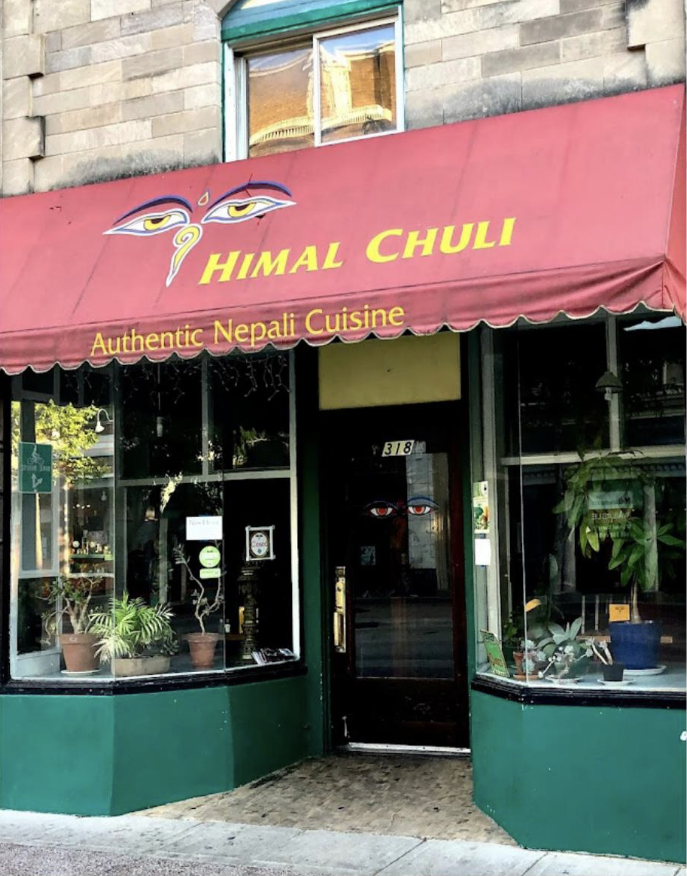
Himal Chuli restaurant at 318 State St.
Himal Chuli is the name of the 18th-highest mountain in the world. But few people know that the name also means "kitchen of the mountains" in Nepali. For Madison residents, however, Himal Chuli is better recognized as a beloved restaurant. Located at 318 State St., it has been serving fresh, flavorful Nepalese cuisine for decades.
Walking down State Street, Himal Chuli is hard to miss. Its red awning stands out against the building’s stone-colored exterior. Inside, the restaurant exudes warmth, with cozy seating and a welcoming atmosphere. Known for its delicious, home-cooked meals, Himal Chuli holds a distinction that many might not realize—it was the first Nepalese restaurant in the United States. Since opening 35 years ago, it has cultivated a rich history.
Krishna and Bishnu Pradhan founded Himal Chuli in the 1980s, later passing the business to their daughter, Jalashree Pradhan, an acupuncturist and practitioner of Chinese herbal medicine. Today, it’s difficult to imagine a downtown Madison without chains like Starbucks, Sweetgreen, or Conrad’s. But when Jalashree reflects on the early days of State Street, she recalls a very different landscape—one lined with mom-and-pop restaurants, family-run cafés, and the budding success of Himal Chuli.
The restaurant’s story began when Krishna Pradhan arrived in Madison in 1972 to complete a Ph.D. in linguistics at the University of Wisconsin-Madison. Jalashree, then eight years old, joined him in 1975 along with other family members.
“We were all separated for quite a few years,” she said.
Eventually, Krishna became an English professor at UW-Madison, where he taught an intensive Nepali study course each summer. The course traditionally ended with a celebratory dinner prepared by Bishnu, who frequently received praise for her cooking.
“People always said the food was so good and that we should do something with it—like start a restaurant,” Jalashree said.
In 1982, the Pradhans began selling their food at Madison block parties—and quickly discovered their popularity.
“We would run out!” Jalashree recalled.
Their homemade pakoras, samosas and momos became local favorites. The family also operated one of Madison’s first food carts before food trucks were a city staple.
“Before there were food trucks, we had a food cart,” Jalashree said. “It was built with wood by my brother. We had to put it on a hinge and drive it downtown to Library Mall.”
For three years, the food cart served as Himal Chuli’s base of operations. It was a true family affair.
“My brothers would haul the cart downtown before school,” she said. “We had a stove inside, and my mom would cook fritters and momos on-site.”
With such success, it became clear that a permanent restaurant was necessary. Krishna found a space on State Street and decided to open Himal Chuli.
At the time, Jalashree was away at college, returning in the summers to help. Initially, the restaurant operated differently—customers ordered from daily specials listed on a whiteboard, and the eatery did not offer sit-down service.
“One challenge was organizing a family-run business,” she said. “We had to figure out who did what. In the beginning, we shared all responsibilities and learned as we went.”
If the food cart was a success, the restaurant proved even more so. Himal Chuli became a staple for students seeking healthy, affordable meals. Many even found jobs there, including international students from Nepal, some of whom went on to become doctors, professors and engineers.
“One of them, I happened to marry,” Jalashree said with a laugh.
State Street has changed over the years, with independent businesses making way for corporate chains. However, some establishments, like the Parthenon, Plaza Tavern, Paul’s Club and the Majestic Theatre, have stood the test of time—just like Himal Chuli.
Through it all, the restaurant’s menu has remained true to its roots. Jalashree highly recommends the momos—steamed dumplings filled with spiced meats or vegetables. In the 1990s, Bishnu’s vegetable momos (momocha) were recognized among Bon Appétit's top 100 foods.
Today, State Street boasts a variety of international cuisines, a testament to the contributions of immigrant and family-owned restaurants. Himal Chuli’s legacy extends beyond food—it is a story of community, resilience and lasting connections.
For history majors, the restaurant offers a compelling case study in cultural preservation and migration. It illustrates how food serves as both a personal and communal anchor, bridging traditions across continents. The Pradhan family’s journey—rooted in academia and intertwined with Madison’s ever-evolving landscape—demonstrates how history is not just studied but lived, tasted and shared.
Restaurants may come and go, but those that endure become integral parts of their communities. Himal Chuli is more than a place to grab a meal; it’s a comforting space where students gather before exams, professors reflect over lunch and newcomers find a taste of home. It is a piece of history—one that continues to be written with every dish served.
On January 1st, 2026, Himal Chuli closed after almost 40 years on State St. Ashim Malla, grandson of the restaurant’s owners plans to reopen under the name Himali Chulo. This translates to "kitchen from the mountains."
This article was featured in our Spring 2025 publication, The Education Edition. Read The Dish’s past print publications on our Publications Page.